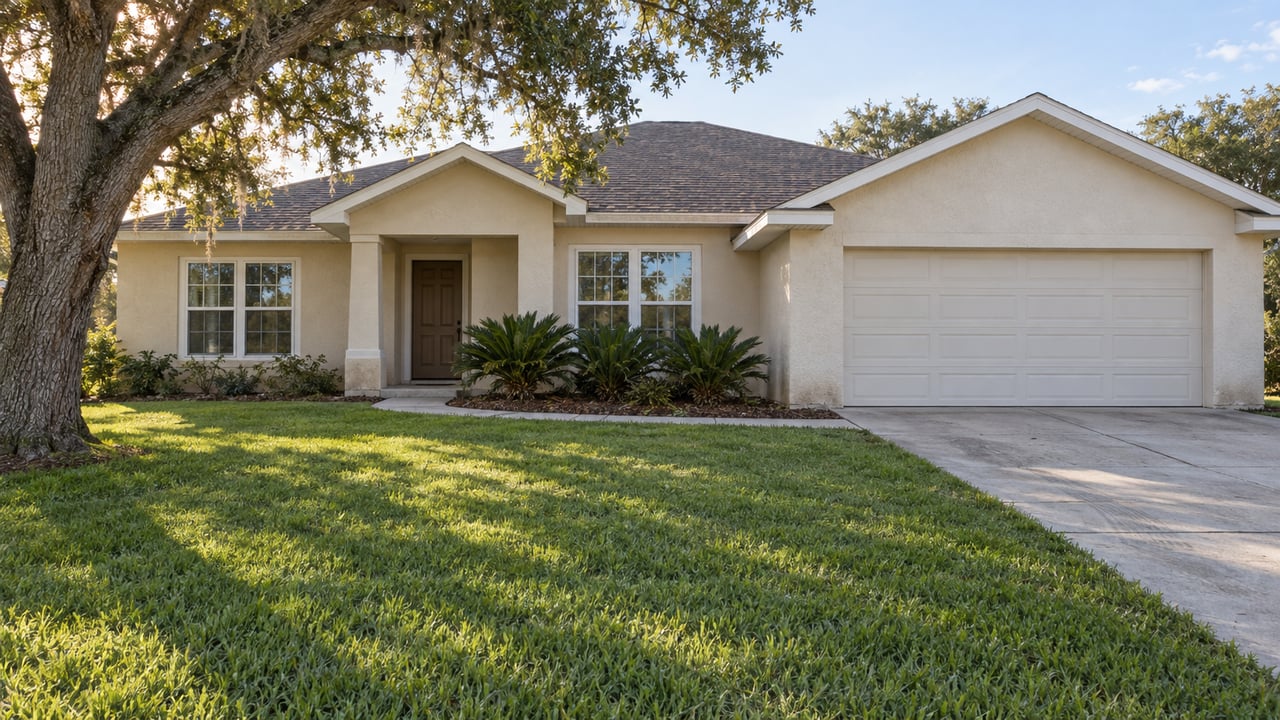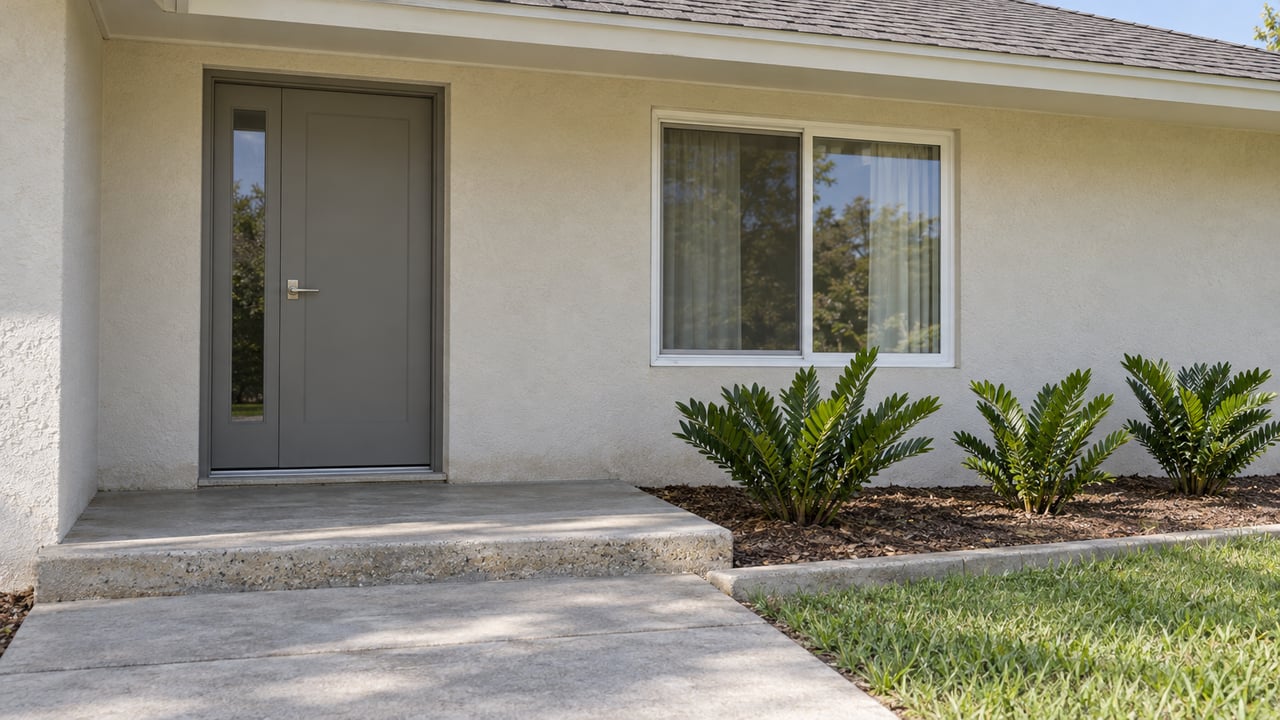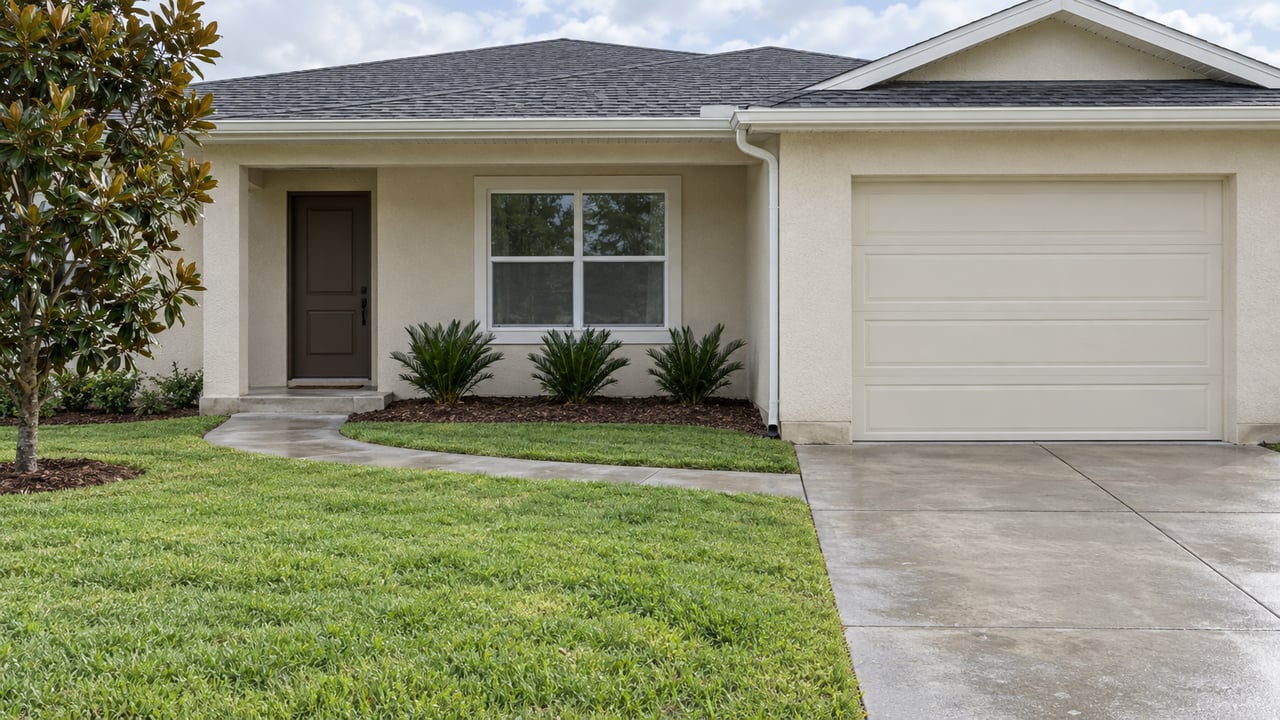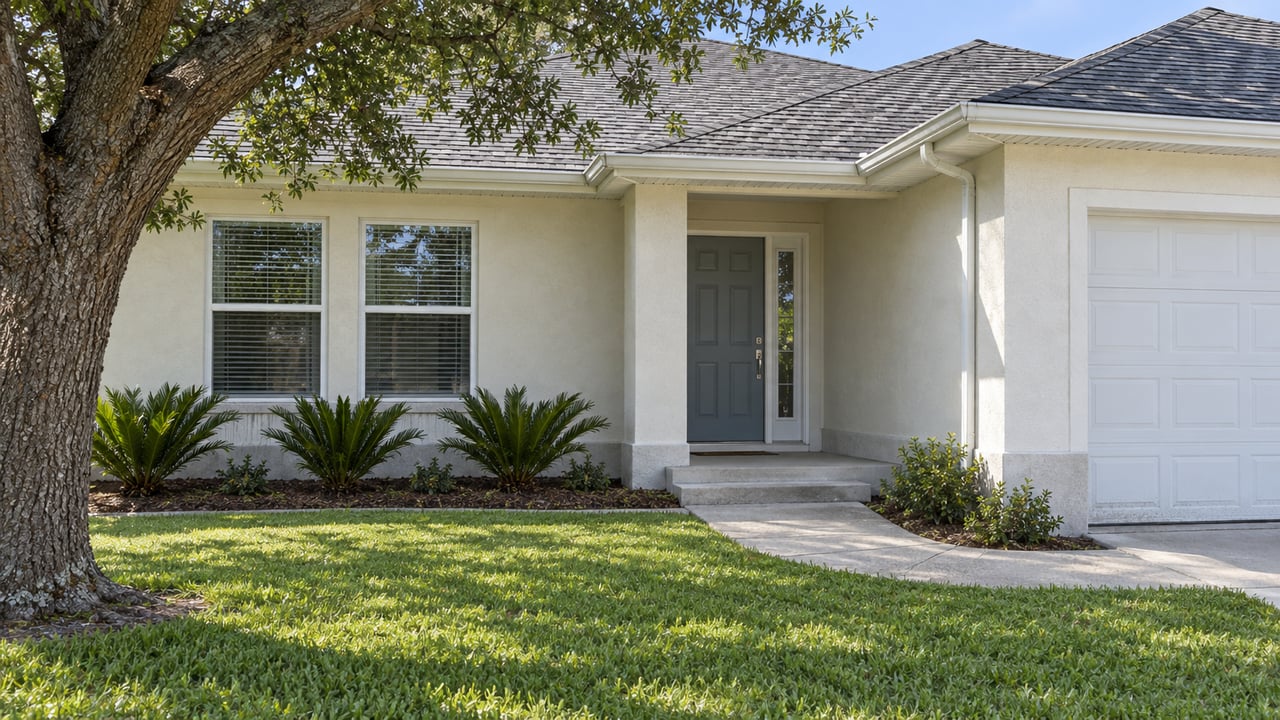
Say you buy a lot in Hernando County and plan to put a manufactured or modular home on it. As of this fall, if the home fits the state's definition of an off-site constructed residential dwelling, Florida law requires the county to permit it by right wherever it permits a site-built single-family house. What stays open is the cost of putting it there, and the county's current rule-making points to a single place where that cost changes. It's the foundation, and the zoning district printed on your lot decides what the county may require.
The fee math explains why the foundation matters so much. Hernando's impact fees barely change between a factory-built home and a site-built one. If a factory-built home is going to save you money on a Hernando lot, the savings have to come from the home itself. That makes any added cost below the floor line worth understanding before you close on the land.
Two Bills Wrote the Same Statute, With Two Start Dates
The 2026 Legislature created Section 553.385 of the Florida Statutes twice. House Bill 399, signed March 27, 2026 and chaptered as 2026-7, creates it in Section 8 with an effective date of January 1, 2027. House Bill 803, a permitting bill signed May 6, 2026 and chaptered as 2026-63, creates its own version in Section 6. That act took effect July 1, 2026. The current statute page on Online Sunshine prints both versions, with a note on multiple acts affecting the same provision.
At the core, both versions say the same thing. An off-site constructed home must be "permitted as of right in any zoning district where single-family detached dwellings are allowed," and a local government can't treat it more restrictively than a site-built house in the same district. The HB 399 version limits that to two defined categories: manufactured buildings intended for single-family use, and HUD-code manufactured homes built wholly or partly off site and "treated as real property." In a Citrus County Chronicle opinion column, James Dicks of DIX Developments summed it up this way: a county "can regulate roof pitch. It cannot exclude the home because it was built in a factory."
Counties keep a short list of standards they may adopt, as long as those standards are reasonable, don't have the effect of excluding these homes, and apply equally to site-built homes. Under HB 399, that list is limited to:
- Roof pitch
- Minimum square footage of livable space
- Type and quality of exterior finishing materials
- Foundation enclosure
- Existence and type of attached structures
- Building setbacks, lot dimensions, and orientation
The fourth item on that list is the one Hernando's staff has developed furthest.
The Fee Schedule Barely Changes With How the House Was Built
If a county can't keep factory-built homes out, you might expect it to charge them very differently. Hernando's posted impact fee schedule shows the opposite. Under Phase Two of the schedule, effective December 2, 2025, the per-unit totals look like this:
| Category on the county schedule | Educational facilities | Roads | Total per dwelling unit |
|---|---|---|---|
| Single family detached | $6,135 | $4,354 | $12,036 |
| Mobile home, 1 acre or more | $6,135 | $4,354 | $11,807 |
| Mobile home, other | $6,138 | $4,354 | $11,716 |
The two largest line items, schools and roads, are identical or nearly so. On a lot of an acre or more, a manufactured home's total is $229 below a site-built home's. That schedule is still the one linked from the county's Building Fees page. Ordinance 2026-04, adopted this year, describes itself as correcting scrivener's errors with no substantive changes. The schedule itself says it's not the final word on any given project and directs applicants to the county's Zoning Division for an exact fee.
Utility hookups follow the same pattern. If the lot connects to county water and sewer, Hernando's posted connection fee for a 5/8-inch meter is $7,960: $2,397 for water and $5,563 for sewer. That charge doesn't depend on whether the walls were framed on site or in a plant.
So the county's fixed charges for a typical single-family lot come close to $20,000 either way. Building a home in a factory doesn't lower that number. What a factory-built home can change is the price of the house itself, and the foundation rule determines how much of that difference you keep.
The Foundation Rule Depends on the Zoning District
On June 23, 2026, the Hernando County Board of County Commissioners held a discussion item on HB 399, File 17610. It was for discussion only, with no recommendation requested. The staff handout attached to it lays out a concept called a "Tiered Foundation Standard by Zoning District":
| District group in the staff concept | Example districts | Proposed foundation enclosure |
|---|---|---|
| Districts that already permit manufactured or mobile homes | RM, R-1A, AG, Country 2.5, R-1-MH, AR, AR-1, AR-2, CV | Standard HUD-compliant skirting |
| Single-family and site-built residential districts | R-1B, R-1C, R-2, R-2.5, R-3, R-4, RR | Masonry stem wall as the perimeter enclosure, with at least one access panel |
| Other residential districts | PUD, mixed-use with a residential component | To be determined through the Comprehensive Plan and code update |
The handout says plainly that the first tier carries "no additional cost burden." Among the key considerations, it says a masonry stem wall "adds estimated cost over standard skirting." No dollar figure is attached to that statement, and the cost will vary with the home's footprint and the site.
From the builder side, a stem wall involves more than a cosmetic upgrade. The handout notes that any stem wall requirement would need to comply with federal installation standards at 24 C.F.R. Part 3285 and the manufacturer's HUD-approved installation instructions, with installation by a licensed mobile home installer under Chapter 320 of the Florida Statutes. The county's inspection role would be limited to confirming the stem wall and access panel were installed as designed. Structural inspection of the manufactured home itself stays with the Florida Department of Highway Safety and Motor Vehicles. The staff document also states that the county has no authority over the home's structural, mechanical, plumbing or electrical components, which HUD regulates.
On a lot zoned AG or AR, a manufactured home would carry nearly the same county fees as a site-built house and, under this concept, skirting as its enclosure. On an R-1C lot, the fees would be just as close, but the foundation line in the budget would grow. Two lots at a similar asking price could therefore support different total project costs for the same home.
According to Hernando Sun reporting from July 3, 2026, Development Services Planning Director Omar DePablo described a work plan that included auditing the code for rules that treat factory-built homes differently, identifying every district that allows single-family homes, and working with factory homebuilders to see whether any standard could end up excluding their homes.
A Timeline That Has Already Slipped
Staff attached a proposed hearing schedule to the June item. Here it is, with what the posted agendas show so far:
- Planning and Zoning Commission, September 14, 2026. The posted agenda for that date lists rezonings, special exceptions and plats.
- LPA transmittal hearing, October 6, 2026. The October 6 agenda lists a different small-scale plan amendment as its only legislative item.
- First BOCC ordinance hearing, November 10, 2026. No agenda was posted for this date as of late October. The October 27 BOCC agenda didn't list the item, and the next Planning and Zoning meeting is set for November 9.
- Ordinance adoption, December 1, 2026. This was the target date for both the land development regulations and the Comprehensive Plan changes.
The schedule was built around the January 1, 2027 date in HB 399. Meanwhile, the HB 803 version of the same statute has been in effect since July 1. That leaves a stretch where the state rule applies but Hernando hasn't yet adopted its local standards, including any decision on stem walls. The tiered foundation table is still a concept from a June discussion. It could be adopted as written, changed, or dropped.
Running a Specific Hernando Lot Through This
For anyone weighing a factory-built home on Hernando land this fall, the questions come in this order:
- What district is the lot zoned? The tier it falls into under the staff concept points to which foundation enclosure may come up.
- Is the lot in a PUD? That tier was left to be determined.
- Which impact fee category will the county apply to this home? The Zoning Division sets the exact figure.
- Will the lot connect to county water and sewer? The posted 5/8-inch connection fee is $7,960 regardless of home type.
- Has the ordinance been adopted yet? Check the county's Legistar calendar for the November and December hearing dates before you lock in a foundation budget.
This post is general information about public rules and county proposals. It isn't legal, tax or financial advice. Confirm how any of it applies to your property with the county, a Florida real estate attorney or your lender.
Does every manufactured home qualify under the new statute?
The HB 399 text defines two categories: a manufactured building intended for single-family residential use, and a HUD-code manufactured home that is constructed wholly or partly off site and "treated as real property." How a particular home meets that definition is a titling and tax question to take up with the county and a qualified professional.
Can Hernando still set a minimum home size?
Yes. Minimum livable square footage is on the statute's list, but it has to apply equally to site-built homes in the same district.
Does the new law change impact fees?
Neither version of Section 553.385 addresses impact fees. Hernando's current schedule already charges mobile home categories within a few hundred dollars of single-family detached.
If you're comparing a manufactured, modular or site-built home on a Hernando lot, Christine brings builder-side experience with foundations, allowances and county fee schedules to that comparison. Hall Way Home can help you check a specific parcel's zoning and fee picture before you commit to the land. Find Your Way Home: Get a Free Home Valuation.