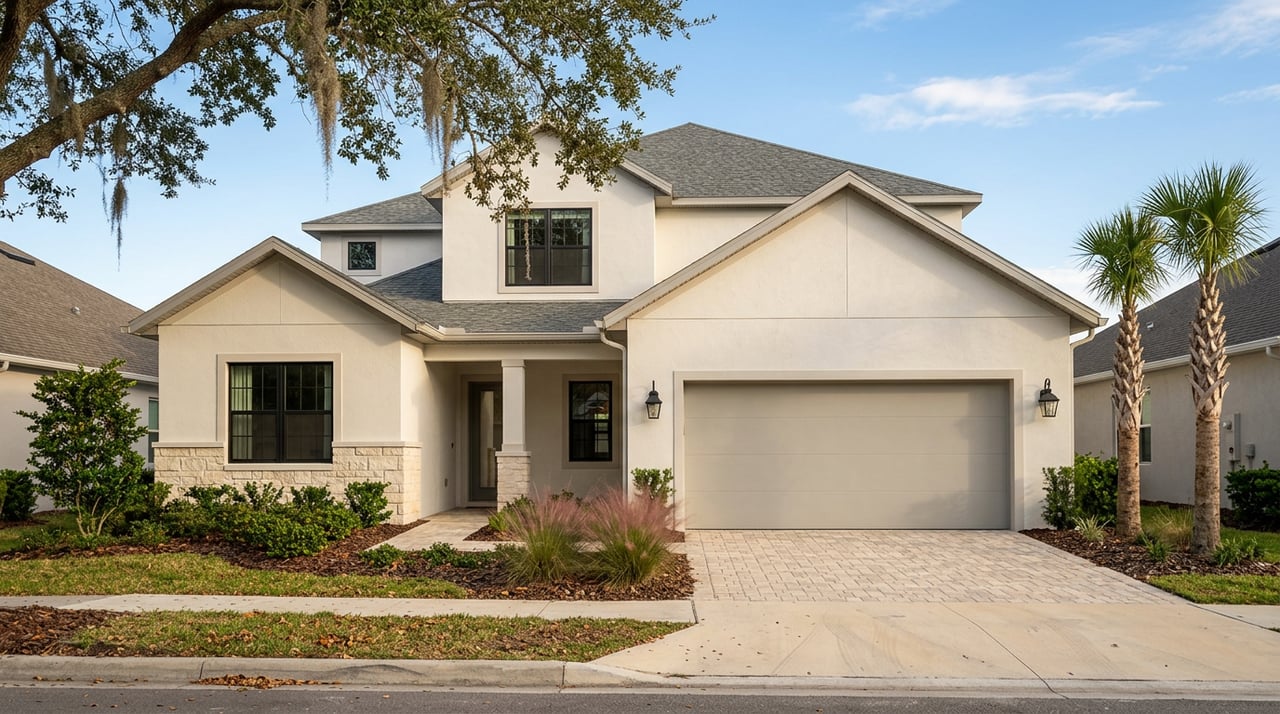
Is a bigger backyard worth a longer drive, or would you trade some yard for a shorter commute and a gated feel? If you are choosing between New Tampa and Wesley Chapel for a new build, you are not alone. This is one of the most common decisions move-up and relocation buyers face in North Tampa. In this guide, you will see how the two stack up on builders, lots, carrying costs, timelines, upgrades, and daily living so you can plan smarter model-home visits and make a clear choice. Let’s dive in.
Quick comparison: who each area fits
- New Tampa tends to fit buyers who want larger lots, established amenities, and a shorter commute to USF or downtown compared with farther-north suburbs. Gated pockets and semi-custom options are common in select villages.
- Wesley Chapel fits buyers who want a wide menu of national builders, frequent phase releases, and a range of prices from townhomes to large single-family plans in active master-planned settings.
- Both areas can deliver similar list prices by village and lot. Your total monthly cost will often hinge on the specific CDD assessment, HOA dues, and your chosen upgrades.
Builders and product mix
Wesley Chapel: broad national selection
Wesley Chapel is one of Tampa Bay’s most active new-home markets. You will find national builders like Lennar, D.R. Horton, Pulte, Mattamy, Taylor Morrison, and David Weekley building across multiple villages and price tiers. Use the Wesley Chapel community index to shortlist model centers that match your target lot width and square footage.
Model-home stops to consider:
- David Weekley’s Garden Series at Chapel Crossings for a village-scale look at plans and amenities.
- Builder rows within Wiregrass-area villages to compare 40 to 50 foot offerings side by side.
- A higher-end enclave within the same master plan to see how larger lots and finishes change the feel and price.
Tip: Call ahead to ask if the model is furnished and which items are included versus upgrades. Also confirm any quick-move-in specs available this month.
New Tampa: larger-lot pockets and gated villages
New Tampa mixes older master-planned neighborhoods with newer gated sections and infill pockets. If you want yard space and a shorter drive to Tampa job centers, put gated K-Bar Ranch on your list. M/I Homes has promoted larger lots, with select sections advertising up to 70 by 120 foot homesites. Start with the K-Bar Ranch community page to see current plans and inventory.
Model-home stops to consider:
- K-Bar Ranch by M/I Homes for larger homesites and higher-end options.
- Established master plans like Tampa Palms and Cory Lake Isles to compare governing structures, amenities, and commute convenience. Confirm which villages still have active model homes.
- Any new gated enclave marketing 60 to 70 foot lots to experience space and privacy differences firsthand.
Lot sizes and layouts
Lot size is a top separator between the two areas.
- New Tampa often features larger private yards in select villages. For example, K-Bar Ranch has sections with advertised lots up to 70 by 120 feet, which gives you more room for a pool, a larger lanai, or side-yard privacy. Verify dimensions by section on the builder’s page.
- Wesley Chapel villages frequently launch with 40 to 50 foot lots in the core phases. That tighter footprint can keep prices approachable, but it also reduces side setbacks and backyard depth compared with 60 to 70 foot products. Higher-end enclaves within the same master plan may offer larger lots.
Pro tip: Filter your model-home search by lot width and target plans that realistically fit your furniture, workflow, and outdoor goals. That will save you time and prevent upgrade surprises.
Carrying costs: CDDs and HOAs
A Community Development District, or CDD, is a special-purpose local government that funds and maintains community infrastructure and amenities. Assessments appear on your property tax bill. You can read the statutory framework in Florida Chapter 190. Always verify the exact assessment and HOA dues for the specific lot you plan to buy.
Wesley Chapel example: Wiregrass CDD
Many Wesley Chapel master plans layer a CDD assessment with HOA dues. In Wiregrass, the FY 2024–25 schedule shows several single-family classifications with annual totals near 1,500 to 1,700 dollars, which is roughly 125 to 145 dollars per month when you convert it. See the district’s adopted assessment chart for details by lot type in the Wiregrass CDD budget document. Village, bond series, and product type drive the final number.
New Tampa mix: more variance by village
New Tampa includes established neighborhoods that may rely more on HOA dues and smaller or no CDD bond assessments, plus newer pockets where a CDD still funds infrastructure. Every parcel is different. Ask the sales center for the tax estimate showing the non-ad valorem line items and any master or sub-association dues.
Quick due-diligence checklist
- Ask the builder for the CDD name, the adopted budget, and the lot’s assessment schedule, plus any bond prepayment options.
- Request the HOA’s current budget, reserve study, and the last 12 months of meeting minutes to screen for special assessments.
- Convert any annual CDD total into a monthly number so you can compare options apples to apples.
Commute and daily living
If you work at or near USF or in North Tampa, New Tampa tends to offer shorter drives because it sits closer to Bruce B. Downs, I-75, and I-275. For example, model pages for K-Bar Ranch reference about 20 to 25 minute commutes in typical traffic from select villages. See the K-Bar Ranch community page for context and verify from your lot during your preferred commute window.
Wesley Chapel sits farther north, so expect longer drives to downtown Tampa in many cases, often 30 to 45 minutes depending on time and route. The tradeoff is vibrant master-planned living with on-site amenities and a critical mass of shopping and services. Always test the drive from the exact subdivision at the times you plan to travel.
Build timing and how to shop
If you need to move quickly, focus on inventory or spec homes. These can often close in about 30 to 60 days. If you want to choose your lot, elevation, and structural options, plan for roughly 6 to 12 months with a production builder. Local permitting, weather, and supply chains can add time. A practical overview of these ranges is outlined in this new-construction process guide.
Shopping tips:
- Ask each sales rep for a milestone-based timeline to foundation, framing, lock-up, and finishes.
- Confirm your rate-lock window with the builder’s preferred lender. Some programs offer extended locks for to-be-builts.
- If timing is tight, prioritize quick-move-in lists and lots that are already permitted.
What upgrades really cost
Included features vary widely by builder. Some national builders market broad standard packages. Lennar’s “Everything’s Included” approach, for example, often lists quartz counters, stainless appliances, tile in wet areas, blinds, a screened lanai, and smart-home features as standard in many communities. See how that shapes value by reviewing a published features list, such as this Lennar resource overview, then compare it to other builders’ scopes.
Common upgrade ranges to plan for:
- Quartz countertops: a useful budgeting range is about 3,000 to 7,000 dollars depending on square footage and slab grade. See cost guidance in this quartz overview. Prices vary by builder and market.
- Flooring upgrades: luxury vinyl plank or higher-end tile often runs about 2 to 8 dollars per square foot for materials, plus labor. Review material ranges like those summarized by Urban Customs, then ask the design center for installed, plan-specific pricing.
- Outdoor living and lanais: a screened or extended lanai may be a builder option or an aftermarket add. Builder-packaged options are often more cost efficient than post-close work. Request itemized quotes.
- Pool packages: a realistic Florida budget for an in-ground pool can be about 40,000 to 100,000 dollars or more depending on shell type and features. Use this as a ballpark and confirm if the builder offers a base package or allowance. See general cost context from Angi.
Tip: Get the builder’s written included-features list and an itemized design-center price sheet. That turns model-home eye candy into a clear budget.
Model-home visit checklist
Bring this to each sales center:
- Lot and phase: exact lot ID, community phase map, and whether the lot backs to open space, a road, or another yard.
- CDD and HOA: the district name, the adopted budget, and the assessment schedule for that lot, plus the HOA budget and recent minutes.
- Scope of work: written inclusions for appliances, counters, flooring, window coverings, and lanai screening, plus an itemized upgrade list.
- Timeline and lending: milestone-based build timeline and the preferred lender’s rate-lock options.
- Practical rules: fencing, lot coverage, yard maintenance responsibilities, and any flood or utility notes that affect usable yard and long-term costs.
How to choose: a simple plan
- Start with your non-negotiables. For example, minimum lot width, garage count, or commute time.
- Pick three model centers in each area that match those must-haves. In Wesley Chapel, use the community index to target the right lot widths. In New Tampa, tour K-Bar Ranch and one established master plan for contrast.
- Compare total monthly costs. Add principal, interest, taxes, CDD assessment converted to a monthly number, HOA dues, and a realistic upgrade budget.
- Drive your commute at peak time from each top contender.
- Sleep on it, then revisit your top two to confirm the feel matches your day-to-day life.
Ready for a local, builder-savvy second set of eyes on your shortlist? Reach out to Christine Hall for new-construction guidance, timeline planning, and a focused model-home tour plan tailored to your must-haves.
FAQs
What is a CDD in Wesley Chapel and how does it affect my payment?
- A Community Development District funds and maintains infrastructure, and the assessment appears as a non-ad valorem line on your tax bill. In Wiregrass, many single-family lots show annual totals near 1,500 to 1,700 dollars for FY 2024–25, which is about 125 to 145 dollars per month when converted.
How do New Tampa lot sizes compare with Wesley Chapel?
- Select New Tampa villages, such as K-Bar Ranch, advertise larger sites up to 70 by 120 feet in some sections, while many Wesley Chapel core phases concentrate 40 to 50 foot lots, with larger options in higher-end enclaves.
How long does a new build take in either area?
- Quick-move-in or spec homes can often close in about 30 to 60 days, while a to-be-built home commonly runs about 6 to 12 months from contract to move-in with a production builder, depending on permitting, weather, and supply chains.
Which area is better for a shorter commute to Tampa job centers?
- New Tampa is generally closer to USF, I-75, and I-275, so it often yields shorter drives to many North Tampa employers, while Wesley Chapel can add time depending on your route and schedule.
What upgrades should I budget for on a new build?
- Plan for popular adds like quartz counters, upgraded flooring, enhanced outdoor living, and possibly a pool. As a ballpark, quartz counters can run about 3,000 to 7,000 dollars, LVP materials about 2 to 8 dollars per square foot, and a pool about 40,000 to 100,000 dollars or more, with final pricing set by your builder and plan.