Buying vacant land can feel simple at first. You find a parcel, picture the home or project you want, and assume the rest will fall into place. In Citrus County, it is usually not that simple. Before you buy land in 34446 or nearby areas, you need to know whether the lot is actually usable for your plans, what approvals may be required, and what extra costs could show up after closing. Let’s dive in.
Vacant land is a project
One of the biggest mistakes buyers make is treating land like a blank slate. In Citrus County, vacant land is reviewed through county GIS layers that can show roads, lots, subdivisions, easements, rights-of-way, utilities, flood zones, and wetlands.
That matters because zoning is only one piece of the puzzle. The county also says a site development plan is required for development on vacant land, and that plan must show details like the legal description, boundary survey, proposed buildings, driveway, water bodies, wetlands, and distances from property lines.
Start with zoning and future land use
Before you make an offer, confirm the parcel’s current zoning and future land use through Citrus County’s GIS and address lookup tools. These tools can also help you review setbacks, parcel data, utilities, and other planning layers tied to the property.
This step is important because the listing description may not tell the full story. Citrus County notes that GIS data should be independently verified, so you do not want to rely only on marketing remarks or seller assumptions.
Why zoning alone is not enough
A parcel may have zoning that sounds promising, but that does not automatically mean your exact plan will work. Zoning helps define allowable land uses and structure characteristics such as building height, but access, setbacks, environmental conditions, and site-plan approval also matter.
If a property does not meet the code as it stands, the county uses formal variance and conditional-use processes. In other words, there is no safe assumption that an exception will be easy or informal.
Buildability is the real question
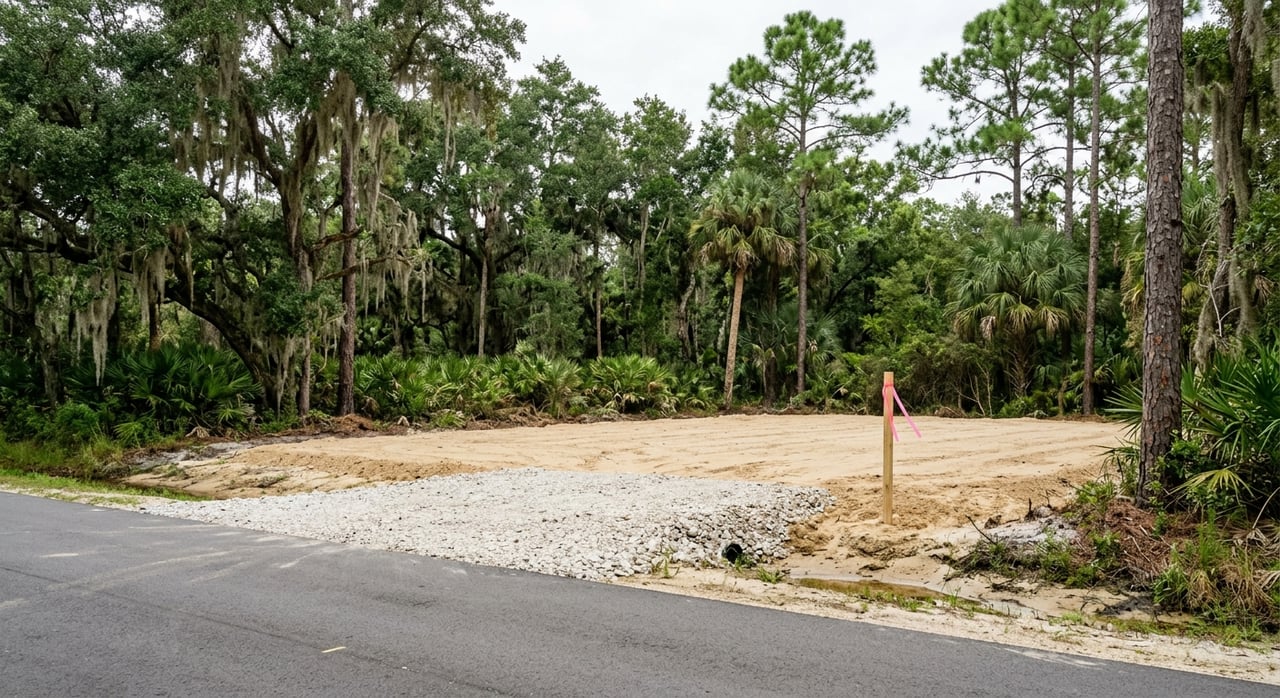
Acreage does not equal buildability. In Citrus County, a vacant parcel should not move into development until there is an approved site development plan or preliminary subdivision plat on file.
That means your due diligence should focus on whether the lot can actually support the home, driveway, utilities, and layout you want. A parcel can look large on paper and still be limited by setbacks, access issues, wetlands, or flood-related constraints.
What to verify early
Before your contract becomes hard to cancel, make sure you check:
- Legal description and parcel boundaries
- Road access and any rights-of-way
- Easements that may affect building area
- Current zoning and future land use
- Setbacks and use limitations
- Flood zone and wetlands mapping
- Utility availability
If you are serious about the property, a survey is one of the smartest early investments. It helps confirm what you are really buying and gives you a better foundation for every next decision.
Flood zones and wetlands can change the deal
In Citrus County, this is one of the most important land-buying issues to understand. County GIS layers include FEMA special flood hazard areas and wetlands layers, which can help you screen a property early.
But map layers are only a starting point. The Florida Department of Environmental Protection states that wetlands boundaries are not confirmed by map layers alone. A true wetlands determination requires field review of soils, vegetation, and hydrology.
Why this matters for your budget
If a project affects wetlands or other surface waters, an ERP permit is required. DEP also warns that unauthorized dredging or filling can lead to restoration requirements and monetary fines.
For buyers, this means a parcel that looks dry in photos or on a listing map may still need more review. If the lot is near wet areas, river corridors, or low-lying ground, it can be wise to consider environmental review or wetland delineation before spending heavily on design work.
Water, sewer, septic, and wells are parcel-specific
Utility assumptions can create expensive surprises. Citrus County’s address lookup directs buyers to check septic requirements with the Health Department when a property is not on public sewer.
You also need to verify water service directly with the provider. In the Homosassa area, the Homosassa Special Water District states that it provides a central water system within its boundaries, and properties in that district pay an annual ad valorem fee.
If the lot needs a well
If public water is not available, the lot may need a well. The Southwest Florida Water Management District says a well construction permit is required before installation, and the well must be built by a Florida licensed water-well contractor.
SWFWMD also states that potable wells should be set back 75 feet from septic tanks, drainfields, and drainage or retention ponds. That setback can affect where the house, septic system, and well can all fit on the lot.
Impact fees and connection costs add up fast
Land buyers often focus on purchase price and forget the cost to make the property usable. Citrus County has an impact-fee schedule, and posted examples effective June 23, 2022 include $6,017 for a single-family detached home, $2,401 for an accessory dwelling unit, and $1,612 for an RV park pad or space.
Those figures are helpful examples, but buyers should still confirm current fees for their intended use before closing. Utility review examples from the county permit portal also show that water or sewer service applications may be required before permit approval, and connection fees can be due at permit issuance.
Costs buyers often miss
When you build your land budget, make room for more than the lot itself:
- Survey work
- Wetland or environmental review
- Septic and well review, if needed
- Utility connection fees
- Impact fees
- Site prep and driveway costs
- Permit-related expenses
A cheap parcel can become an expensive project very quickly if these items are not part of your planning.
Be careful with RV and accessory structure plans
Many buyers look at vacant land and think they can place an RV, shed, barn, or container on it right away. In Citrus County, that is not something you should assume.
County permit records show that temporary RV occupancy may be approved only while a single-family home is under construction with an active permit. That approval may last up to one year or until the certificate of occupancy is issued.
Vacant land is not a free-use property
County review comments also cite a rule that accessory uses or structures may not be placed on vacant property before the principal use is established. So if your plan involves temporary living, storage buildings, or nontraditional structures, verify those rules first.
This is especially important for buyers who want flexibility right after closing. A quick call and written verification can save you from buying a parcel that does not fit your intended use.
A smart offer-to-close roadmap
If you are thinking about buying land in Citrus County, a clear process helps reduce risk. Here is a practical way to approach it.
1. Review the parcel in county GIS
Start by confirming parcel boundaries, legal description, easements, rights-of-way, zoning, future land use, flood zone, and wetlands layers. This gives you a working picture of the lot before you spend more money.
2. Order a survey
A survey helps verify boundaries and identify issues that may not be obvious from listing materials alone. If the property is near wet areas, you may also want added environmental review.
3. Verify utilities directly
Check water and sewer service with the actual provider. If the property is not served by public systems, confirm septic and well requirements before moving forward.
4. Ask about total development costs
Request current impact fee and connection fee information for your intended use. This gives you a more realistic view of the true cost of the project.
5. Use strong contingencies
For many land buyers, contingencies are where risk is managed best. Consider contingencies tied to zoning confirmation, buildability, utilities, flood and wetland review, survey results, title, and legal access.
Common mistakes to avoid in 34446
Land purchases in the 34446 area can work well when you go in with a clear plan. They can also go sideways when buyers skip the basics.
Here are some of the most common mistakes:
- Assuming the parcel is buildable because it is large
- Trusting listing descriptions without independent verification
- Ignoring wetlands or flood-related concerns early
- Assuming utilities are nearby or easy to connect
- Forgetting impact fees and connection costs
- Treating RV use as a permanent housing solution
- Assuming sheds, barns, or containers can be added first
Why local guidance matters
Buying land is different from buying an existing home. You are not just evaluating the parcel. You are evaluating the path from raw land to a finished, usable property.
That is where practical local experience makes a difference. When you understand construction planning, lot constraints, and the local approval process, it is much easier to spot problems before they become expensive.
If you are considering a land purchase in Citrus County, having someone who can help you think through zoning, layout, utilities, budget, and buildability can save time and protect your investment. If you want a clear, grounded plan for your next move, connect with Christine Hall.
FAQs
What should you check before buying land in Citrus County?
- You should confirm zoning, future land use, access, parcel boundaries, easements, flood zone, wetlands screening, utility availability, and likely development costs before closing.
Can you build on any vacant lot in Citrus County?
- No. Buildability depends on factors such as zoning, future land use, access, setbacks, environmental constraints, and county site-plan approval requirements.
Do Citrus County land buyers need to check wetlands separately?
- Yes. County map layers can help screen a parcel, but DEP states that wetlands boundaries require field review of soils, vegetation, and hydrology.
Do you need a well or septic system on Citrus County land?
- Sometimes. Some parcels have central water or sewer, but others require separate review for septic and well feasibility.
Can you live in an RV on vacant land in Citrus County?
- Temporary RV occupancy may be allowed only while a single-family home is under construction with an active permit, subject to county approval and time limits.
What costs do buyers often miss when buying land in 34446?
- Buyers often underestimate impact fees, utility connection fees, surveys, wetland review, and other site-related costs that come before construction.