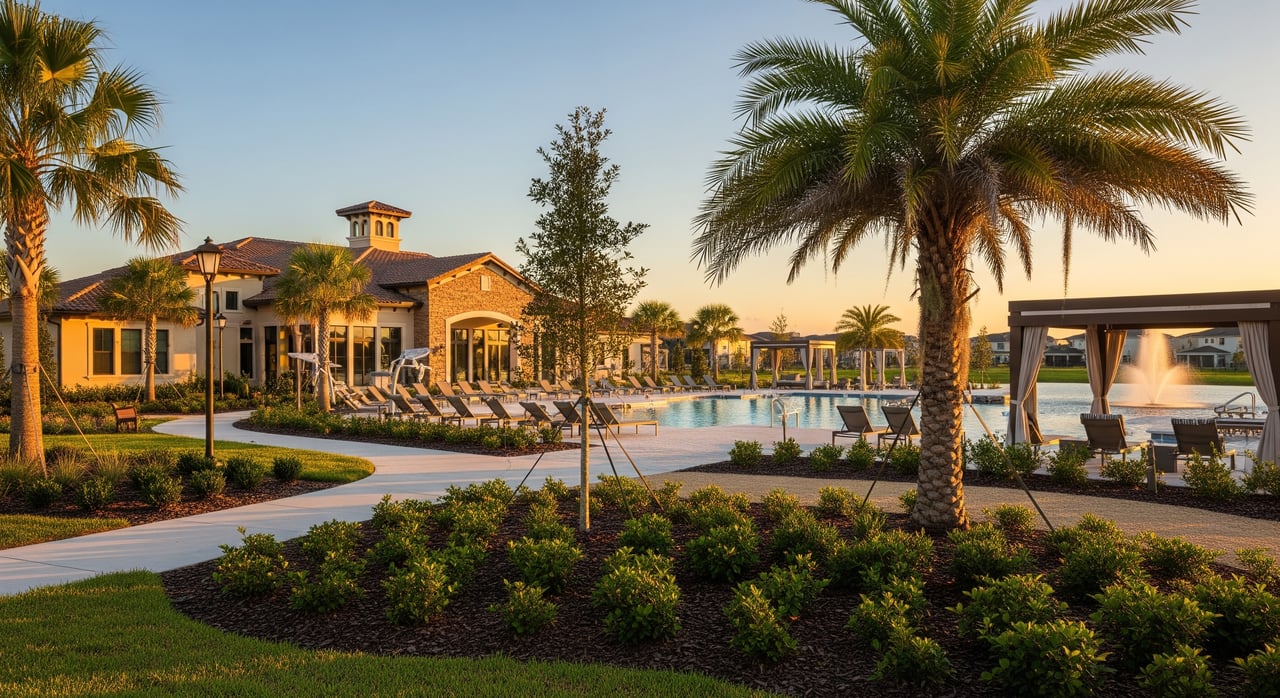
Wondering what day-to-day life actually feels like inside Wesley Chapel’s master-planned communities? If you’re weighing a move for more space, newer construction, or built-in amenities, it helps to picture your weekdays and weekends before you buy. You want convenient routines, options for kids’ activities, and clear expectations around costs and rules. In this guide, you’ll learn how these communities are designed, how HOAs and CDDs work, what to expect for schools and traffic, and where everyday errands fit in. Let’s dive in.
What “master-planned” means here
In Wesley Chapel, master-planned communities are large, coordinated developments that blend multiple neighborhoods with shared amenities, open space, and on-site or nearby retail. You’ll see walking paths, lakes and preserves, and amenity centers built early in the life of the community. Builders often plan a mix of townhomes and single-family homes across phases so you can right-size within the same area over time.
Developers typically turn over maintenance to homeowner associations or community development districts. That structure keeps common areas, trails, and amenities funded and cared for. It also means you’ll have dues or assessments on top of your mortgage and property taxes. Knowing how those pieces fit together helps you plan your monthly budget.
Amenities that shape your weekdays
Recreation inside the gates
Most master plans in Wesley Chapel offer amenity centers with pools, fitness rooms, playgrounds, and sports courts. Larger communities add staffed clubhouses, fields, and event programming like kids’ camps, fitness classes, and seasonal gatherings. For many families, swim lessons, playdates, and after-school activities happen right in the neighborhood, which can cut down on weekday driving.
Open space and walkability
Expect preserved wetlands and lakes that double as stormwater systems and scenic backdrops. Sidewalks and multiuse paths are common, so you can walk or bike inside your community. Yard sizes vary by product type and phase. Townhomes and village-style sections lean smaller, while higher-end phases tend to offer larger single-family lots.
Mixed-use convenience
Bigger master plans usually reserve parcels near main entrances for retail and services. That might mean a grocer, coffee shop, banking, medical offices, or a few restaurants along State Road 54 or 56. You won’t walk to everything, but you can reach many routine stops without leaving Wesley Chapel.
HOAs, CDDs, and the rules that run things
How dues and assessments work
You’ll likely have an HOA for community standards and amenities. Dues are paid monthly or annually and help cover landscaping of common areas, insurance, irrigation, and facility upkeep. Many large developments also have a CDD that financed roads, utilities, drainage, and amenities through bonds. Those CDD assessments show up on your property tax bill and are separate from HOA dues.
Some builders charge a one-time capital contribution at closing. Before you write an offer, confirm all recurring fees, how they’re paid, and whether future assessments are planned. These costs affect long-term affordability and your total monthly outlay.
Common rules to know
HOAs typically set architectural and landscaping standards and outline rules for parking, fences, exterior paint, holiday decor, satellite dishes, and home businesses. Rental restrictions vary, with some communities allowing short-term rentals and others requiring a minimum lease term. Ask for the latest covenants, conditions, and restrictions so you can be sure the rules fit your lifestyle.
Impact on daily life and resale
Well-funded HOAs and CDDs help maintain curb appeal and shared spaces, which supports long-term value. The tradeoff is less flexibility. If you prefer low-maintenance living with a consistent look and feel, an HOA-managed neighborhood can be a good fit. If you want minimal restrictions, confirm what the community allows before you commit.
Schools, childcare, and daily routines
Public, charter, and private options
Public schools in Wesley Chapel fall under Pasco County Schools. Most master-planned neighborhoods are served by nearby elementary and middle schools, while high school assignments can vary by phase and capacity. Families also use charter and private options across north Tampa Bay based on programs and commute preferences.
Zoning and capacity
Growth in Wesley Chapel has put periodic pressure on enrollment. The district manages capacity through new construction and rezoning when needed. Always verify the current school boundary maps and ask about planned projects if school assignment is important to you. Boundaries can change as new neighborhoods open.
Childcare and preschool
Daycare and preschool options often sit near community entrances or in nearby shopping centers. During fast growth, spots can fill quickly. If you need care on a specific timeline, start your search early and join waitlists as soon as possible.
Getting around: SR 54, SR 56, and I-75
Wesley Chapel sits along State Roads 54 and 56 with I-75 just to the east. This location gives you routes into Tampa via I-75, I-275, and the Veterans Expressway. Where your home sits relative to these routes strongly influences your commute.
Peak congestion usually builds on SR 54 and 56 and southbound I-75 toward Tampa in the morning, with the reverse in the evening. Retail and entertainment along the corridors can create midday and weekend traffic too. Most households rely on personal vehicles. Pasco County Public Transportation offers regional bus service, but fixed-route options are limited compared with denser urban cores.
Road widening and interchange improvements are ongoing across the region. These projects can improve flow over time, though construction can affect short-term noise and travel. If commute time matters to you, test-drive your route during your typical hours before you buy.
Shopping, dining, and healthcare access
Wesley Chapel grew around major retail and lifestyle centers with national grocers, pharmacies, and service businesses. Dining ranges from quick family spots to locally owned restaurants, with more options arriving as the area expands. Nightlife is lighter than downtown Tampa, but it continues to grow.
Healthcare is close at hand. You have a full-service hospital at AdventHealth Wesley Chapel and a network of outpatient clinics and specialists in the area and in nearby Tampa. For most master-planned neighborhoods, everyday errands like grocery runs, pharmacy pickups, and basic medical appointments are within a short drive. Specialty shopping or regional destinations are typically a farther drive depending on traffic and destination.
Real-world examples around Wesley Chapel
The area offers a range of master-planned options. A few representative examples include Wiregrass Ranch, Seven Oaks, Meadow Pointe, and Connerton. These master plans showcase the typical mix of trails, parks, amenity centers, and access to nearby shopping and services along SR 54 and SR 56. Because each phase can differ, verify current amenities, fees, and rules with the community association or builder before making a decision.
A quick neighborhood fit checklist
Use this simple list when touring or researching a community:
- Confirm HOA dues, how they’re paid, and what they cover. Ask about any planned or recent assessments.
- Review the CDD disclosure and recent meeting minutes to understand bond repayment and upcoming projects.
- Verify school assignments with the district’s boundary tool on the date you plan to buy. Ask about any rezoning activity.
- Drive your commute during peak hours and test weekend errands to see real travel times.
- Note proximity to retail and healthcare and check local ordinances for lighting or noise that may affect your home site.
- Confirm the amenity list and whether anything is planned versus already completed.
- Ask about rental rules if you plan to lease the property now or in the future.
Who Wesley Chapel fits best
- Families who want on-site play areas, pools, and programming that reduce weekday driving.
- Move-up buyers who value newer homes, consistent neighborhood standards, and easy access to SR 54, SR 56, and I-75.
- Downsizers seeking low-maintenance living in HOA-managed sections or age-targeted phases.
- Investors who need clarity on HOA rental rules and how CDD assessments affect yield.
Ready to explore with a local guide?
Choosing the right master-planned community in Wesley Chapel comes down to fit: the amenities you’ll use, the fees you’re comfortable with, and the routes you’ll drive every day. If you want a clear, construction-savvy walkthrough of your options, connect with Christine Hall for local guidance, builder-side insight, and a plan tailored to your timeline.
FAQs
What is a CDD fee in Wesley Chapel communities?
- A CDD fee is an assessment on your property tax bill that repays bonds used to build community infrastructure like roads, drainage, and amenities, and it is separate from HOA dues.
How strict are HOAs in these neighborhoods?
- Rules vary by community, but most set standards for exterior appearance, landscaping, parking, and rentals; ask for the latest documents to confirm what applies to your home type and phase.
Are homes within walking distance to shops and schools?
- Many communities have internal sidewalks and paths, while shops and schools are usually a short drive on SR 54 or SR 56; check specific distances from your chosen lot or phase.
How is traffic near SR 54, SR 56, and I-75?
- Traffic typically peaks toward Tampa on weekday mornings and reverses in the evening, with added midday and weekend congestion near major retail; test your route during your usual travel times.
Which schools serve a specific Wesley Chapel address?
- School assignments are set by Pasco County Schools and can change with rezoning, so verify with the district’s boundary lookup for your exact address and planned move date.
Can I rent out a home in a master-planned community?
- It depends on the HOA; some require minimum lease terms or limit short-term rentals, so review rental rules before you buy if leasing is part of your plan.