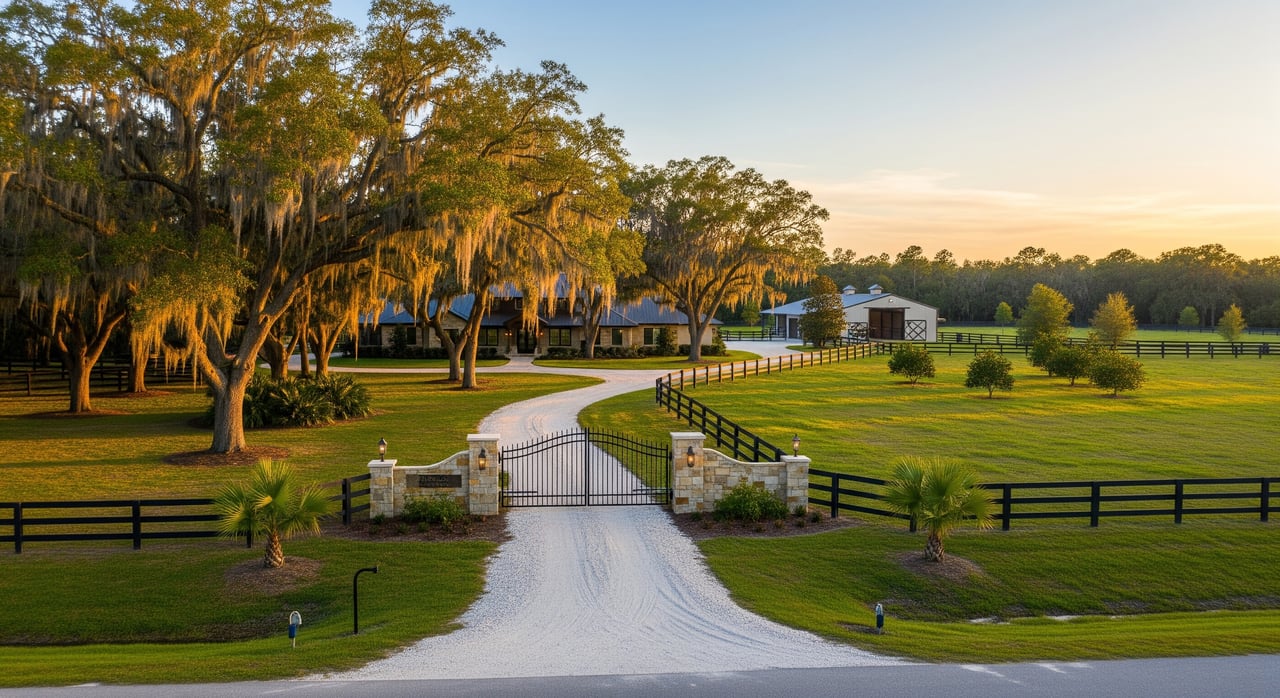
Looking at a few acres near Brooksville and confused by AR, AG, or PDP in the listing? You are not alone. Zoning shapes what you can build, how you can use the land, and how easy it is to split or develop it later. In this guide, you will learn the essentials of Hernando County acreage zoning, what to verify before you offer, and where to find the official rules. Let’s dive in.
Quick zoning decoder for Brooksville
AR or A-R: Agricultural-Residential
AR generally preserves a rural feel while allowing a single-family home on a larger lot. It often permits common rural accessory uses like barns, stables, and small-scale crops or hobby livestock. Many districts allow home occupations and accessory structures, and some may allow an accessory dwelling unit with limits. Always verify numbers and permitted uses in the Land Development Code.
AG or A-G: Agricultural
AG is more agriculture-focused. You can usually live on the land, but the density is lower than residential districts. It is best for working farms or buyers who want fewer residential restrictions. Commercial agriculture processing or retail typically needs extra approval.
PD or PDP: Planned Development
A Planned Development Project is customized zoning that runs with an approved plan and conditions. Parcels in a PDP can have expanded or narrower uses than the base district. You must review the PDP ordinance, master plan, and any recorded conditions to know what is allowed.
Other rural labels you may see
- R-R or RR: Rural Residential with low density.
- A-1 or similar: Agricultural variants with larger minimum lots.
- Estate or Open designations: Large-lot residential with rural character.
Key point: District labels are shorthand. The exact allowed uses, minimum lot sizes, setbacks, and heights live in the county’s Land Development Code or the PDP conditions for that parcel.
What you can usually do on rural acreage
In Hernando County’s rural and agricultural districts, you typically see these uses by right:
- Single-family homes as the primary use
- Accessory structures like barns, garages, and equipment storage
- Agricultural activities such as crop production, horse stables, and hobby livestock
- Home occupations or cottage industries with limits
- Accessory dwelling units in some districts, subject to standards
Uses that often need extra approval
Some activities need a conditional use or special permit. Common examples include commercial kennels, commercial vehicle storage, retail farm markets, event or wedding venues, short-term rentals, or commercial agriculture processing. Subdividing the parcel or pursuing commercial or multifamily use often requires formal review and possibly rezoning.
Setbacks, lot sizes, and density
Rural and agricultural districts still have measurable setbacks and lot size rules. In many Florida counties, you will see front setbacks roughly in the 25 to 40 foot range, side setbacks around 10 to 15 feet, and rear setbacks around 15 to 25 feet. Minimum lot sizes range widely, from less than an acre in some rural residential districts to 5 or more acres in agriculture zones.
These numbers are only examples. Do not rely on listing text for setbacks or density. Confirm them in Hernando County’s Land Development Code or the recorded PDP documents for the parcel. If the land is inside a PDP, the setbacks, uses, and standards may be modified by the ordinance or master plan.
How to confirm the numbers
- Look up the district standards in the county Land Development Code.
- Check the official zoning map and your parcel’s district label.
- If the parcel sits in a PDP, pull the PDP ordinance, master plan, and recorded conditions.
Planned Development Projects: what to check
PDPs approve a site-specific plan with binding conditions. That is why two parcels next to each other can have different rules.
What to do if a listing mentions PD or PDP:
- Obtain the PDP ordinance, site plan, and any recorded restrictions.
- Check whether your parcel is in a specific phase with future infrastructure needs.
- Verify expiration periods, vested rights, or pending approvals with county staff.
- Confirm that your intended use, density, and layout fit the PDP conditions.
Due-diligence checklist before you offer
Use this quick list to avoid surprises:
- Confirm current zoning and the Future Land Use designation.
- Review the Land Development Code for permitted uses, dimensional standards, and accessory use rules.
- Search for PDP ordinances, master plans, overlays, and recorded covenants or easements.
- Evaluate septic and well feasibility, including soils or perc indicators.
- Check flood zones, wetlands, and environmental constraints.
- Verify legal access, frontage, and road maintenance responsibility.
- Confirm utility availability and typical services for the area.
- If you plan a business or special use, ask what approvals are required and the likely timeline.
- Speak with county Planning and Zoning and the Health Department early for an informal review.
Practical questions to ask about any acreage listing
- What is the parcel’s official zoning district and Future Land Use designation?
- Is the property inside a PDP? Can I see the ordinance and master plan?
- What are the exact dimensional standards, including setbacks and lot coverage?
- Are there wetlands, floodplain, or other overlays that affect development?
- Is there a recent soil report or septic evaluation?
- What is the access condition, and who maintains the road?
- Are there recorded covenants, easements, or mineral rights that affect use?
- What approvals are needed for my intended use or any lot splits?
Where listings often mislead
Be cautious with common marketing claims:
- “Agricultural use allowed” may omit size limits or permit requirements for commercial operations.
- “Buildable” can ignore soils or wetlands. A lot still needs septic suitability and health approvals.
- PDP parcels can carry special conditions that limit future uses even when the base zoning looks permissive.
- “Frontage” does not guarantee legal access or county road maintenance.
How we help you move faster
When you are buying acreage, time and clarity matter. You need straight answers on zoning, realistic build paths, and offer strategies that protect your plan. With local roots in Hernando County and hands-on new-construction experience, you get practical, technically informed guidance for land and small-scale development decisions. We focus on buyer representation, investor deal sourcing, and land transactions so you can assess fit, risk, and value with confidence.
Ready to evaluate Brooksville acreage with a clear plan? Connect with Christine Hall to get expert, locally grounded guidance from search to close.
FAQs
What does AR zoning mean in Hernando County?
- AR generally allows a single-family home on a larger lot with rural accessory uses like barns, small-scale crops, and hobby livestock, subject to district standards in the Land Development Code.
Can I keep horses or livestock on Brooksville acreage?
- Many agricultural or agricultural-residential districts allow horses and hobby livestock with limits. Check your specific district and any PDP or recorded covenants.
How do I find the exact setbacks for my parcel?
- Verify in the county’s Land Development Code for your zoning district and review any PDP ordinance or master plan that may modify those standards.
What is a PDP and why does it matter?
- A PDP is a site-specific planned development with binding conditions on uses, density, and design. It can expand or restrict what you can do compared to base zoning.
Can I split my acreage into smaller lots in Hernando County?
- Possibly. You must meet minimum lot size and frontage standards and complete the required platting or approval process. Some splits may require a rezoning or variance.
Are short-term rentals allowed on rural acreage?
- It depends on the zoning district and any special rules or permits. Some short-term rental activity may be treated as a special or conditional use and require approvals.